Unit III: Interest Rates and Investment Demand
Investment- Money spent or expenditures on:
Expected Rates of Return
- New plants (factories)
- Capital equipment (machinery)
- Technology (hardware and software)
- New homes
- Inventories (goods sold by producers)
Expected Rates of Return
- How does business make investment decisions?
- Cost/Benefit analysis
- How does business determine the benefits?
- Expected rate of return
- How does business count the cost?
- Interest costs
- How does business determine the amount of investment they undertake?
- Compare expected rate of return to interest rate
- If expected return > interest cost, then invest
- If expected return < interest cost, then don't invest
- What's the difference?
- Nominal is the observable rate of interest. Real subtracts out inflation (π%) and is only known for ex post factor.
- How do you compute the real interest rate (r%)?
- r% = i% - π%
- What determines the cost of an investment decision?
- The real interest rate (r%)
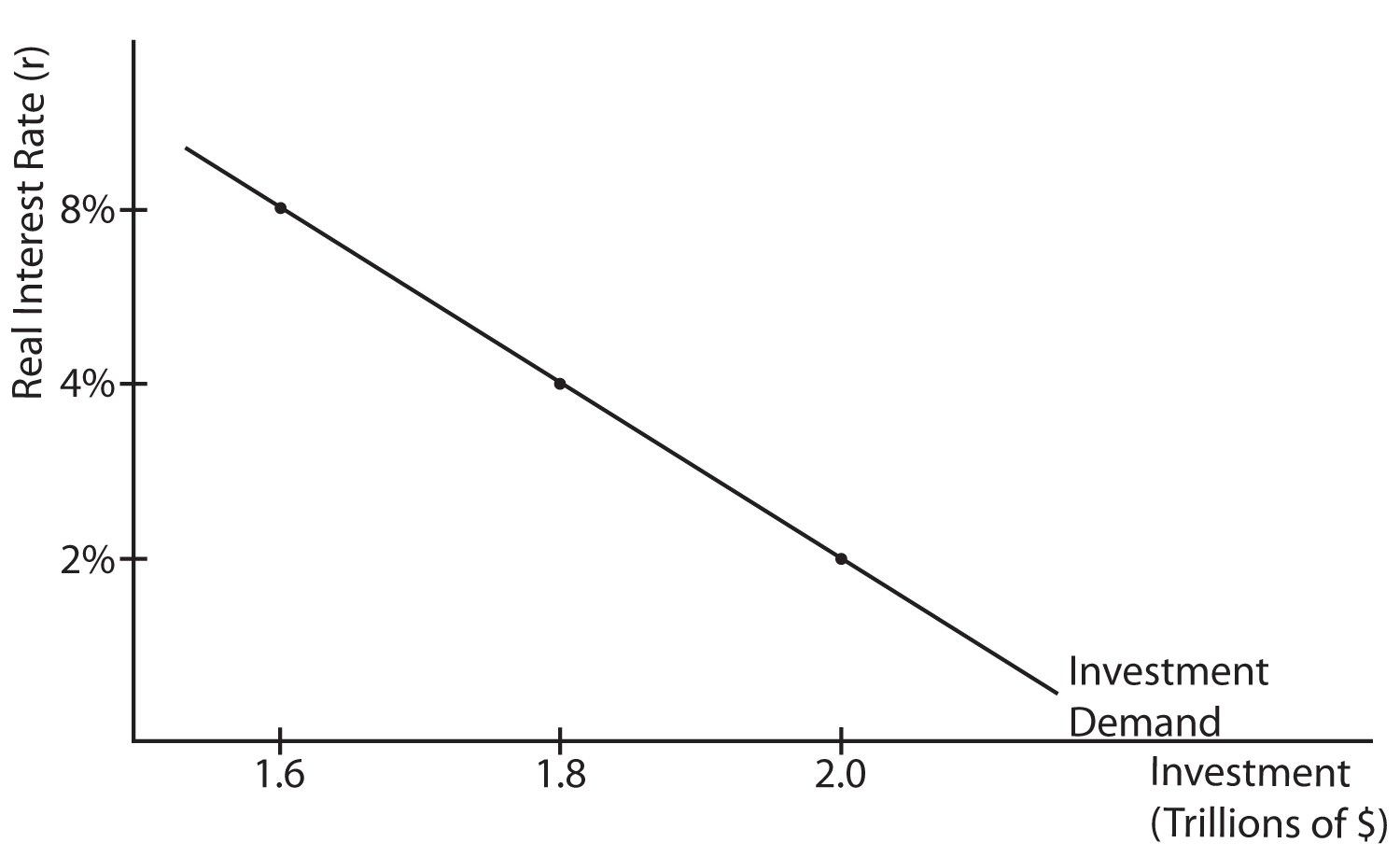 |
- What is the shape of the ID?
- Downward sloping
- Why?
- When interest rates are high, fewer investments are profitable; when interest rates are low, more investments are profitable.
- Conversely, there are few investments that yield high rates of return, and many that yield low rates of return.
Comments
Post a Comment